As a 21-year-old college student, living in the year of 2020, being privileged enough to have access to esteemed medical facilities in America, I still never expected to be hit with the news that our world is in a state of crisis. Or that I’d test positive for coronavirus. But alas, here we are… Social distancing in quarantine. It’s tough for me to even consider writing a blog post about fashion, let alone talk about how COVID-19 is affecting the industry, when so many have contracted the virus and lost loved ones. But of course, fashion and business publications alike are still writing about how this virus is affecting the industry, and how the industry is affecting the virus, so I guess I’ll write about it too.
COVID-19 arrived in Italy on February 21st, directly in the midst of Milan Fashion Week (which was intended to span from the 18th to the 24th). The Fall 2020 Fashion Month Season was just beginning, and following the news of the pandemic’s spread, it seemed as though the industry was at a loss. Some of the fashion market’s most iconic brands and luxury powerhouses canceled their runway shows. Ralph Lauren rescinded the invites for his Fall 2020 show set in April. Giorgio Armani opted for a livestream of the runway on the last day of Milan Fashion Week. And boy, was it eerie to see all the vacant seats on the sidelines. Many editors, reporters, designers, models, and influencers skipped out on shows and booked a flight home. But many other brands and industry personnel, sadly, did not. Perhaps it was too early on for everyone to grasp the severity of this issue. Fashion itself is an industry based on delivering a fantastical idea of reality, a utopian ideal of sorts (and we all know utopian societies don’t deal with pandemics, so why would the utopia’s creators?). Instead of facing full defeat and canceling their shows, esteemed names – including Chanel, Dior, and Louis Vuitton – opted for heightened security and hand sanitizer. Regardless of the distressing news reports, Virgil Abloh, creator of Off-White, said he never considered canceling the brand’s show. He told Women’s Wear Daily that “if we had, it would send a message of panic. And I don’t want to be reactionary.” To further the revolt of social distancing for the sake of fashion, Lanvin’s public relations representative even announced that medical face masks were available upon request at their runway show. Following the lack of industry response, and more specifically their inability to give up runway shows for one season, I felt pretty defeated. Is this what the climate change activists felt like? I had expected a more rapid turnaround, a superior response to the mounting crisis.
However, now that a month has passed since the fall fashion season, I’ve been reconsidering my initial judgments aimed at the industry. Yes, in the first few weeks following the announcement of COVID-19, the industry didn’t necessarily react well to their new reality. Luxury brands, esteemed designers, and department stores were all having to shut their doors, lay off their workers, and lose their suppliers. And yes, some struggled to accept this reality and cancel their shows. I mean, handing out masks and avoiding the European double-kiss backstage is like moving the deck chairs on Titanic while it sinks. But since the end of fall fashion month and the beginning of mandated quarantines, the industry has proven why it holds power. Since forever, the fashion realm has the capability to ignite aspiration in others. To speak to people, to bring color to their dreams. And they can do so to the masses through a variety of carefully curated channels. Take social media for example, and more specifically, Instagram. In light of the seemingly unstoppable pandemic, designers, fashion influencers, and brands themselves have shifted their grids from displaying the latest trends to generating the sharing of information and funding. Have you seen Gucci’s profile lately? Well, if you haven’t, take a look:
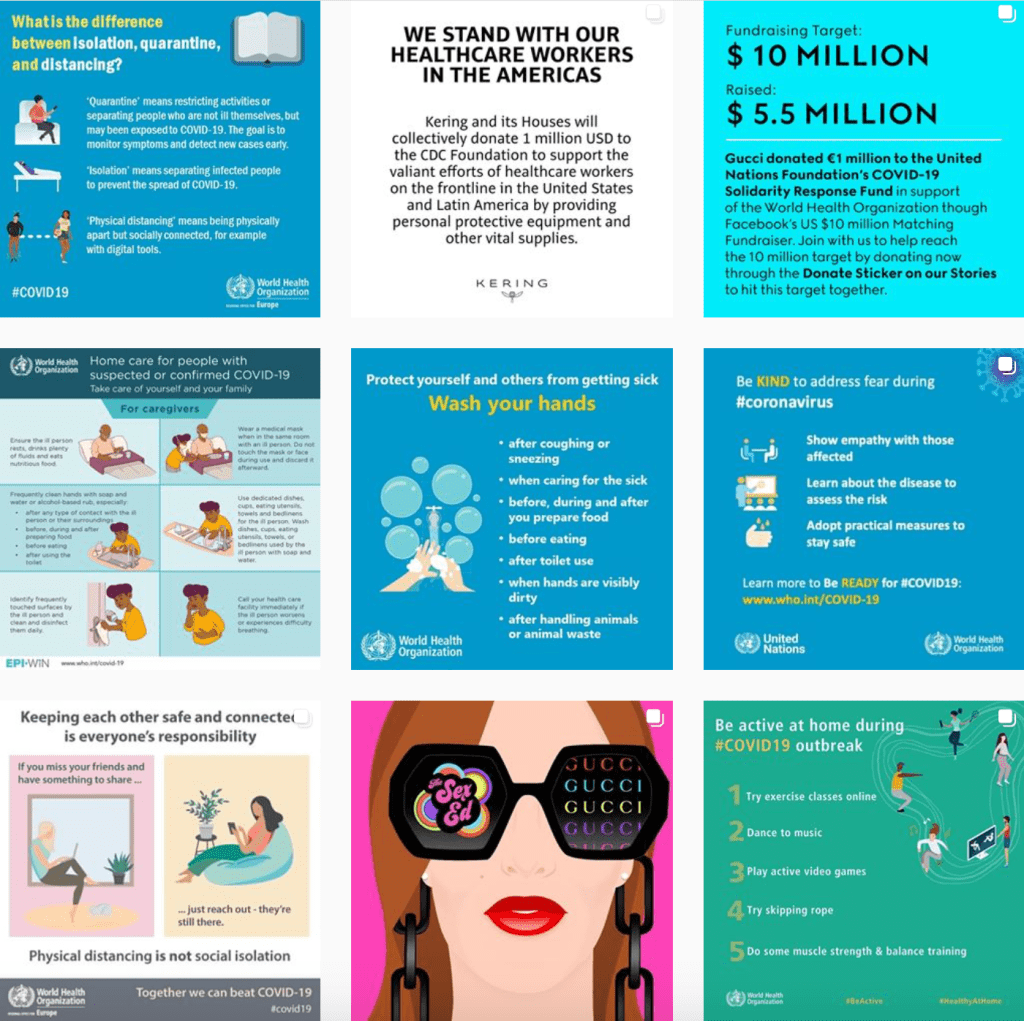
And even better, Gucci isn’t alone. Burberry shared three Instagram posts on March 28th, exclaiming that they support hospitals, vaccines, and community. The luxury brand first turned one of its major factories into providing gowns and masks for NHS. Additionally, the company has made a variety of monetary donations to support vaccine research and fight food insecurity.
The Ralph Lauren Corporate Foundation donated $10 million to help fight the COVID-19 pandemic. If you want to see who they donated the money to and why, click here!
Designers have even made personal donations. According to Harper’s Bazaar, Donatella Versace gave 200,000 euros to the intensive care department of San Raffaele hospital in Milan. “Our hearts go out to all those who have been affected by this disease and to all the doctors and medical staff who have been working heroically non-stop in the past weeks in the effort to take care of our loved ones,” the designer said. “This is when we, as a society, need to stand together and care for one another.”
In case you haven’t seen my article on how influencers are bringing relief to the virus (*sly plug*), check out how fashion influencer Chiara Ferragni (19.1 million followers) raised enough money to construct an intensive care unit in Italy:
The diverse community that makes up the fashion industry has inarguably proven its worth while responding to the virus. Luxury apparel brands, fashion influencers, designers themselves, fashion editors, and many others are utilizing their seductive power of aspiration for good. There might be plenty of things wrong with the fashion industry. It can definitely be dangerous to feed people dreams when reality comes crashing down. And to tell you the truth, I’m equally as bothered by the number of fashion influencers posting their at-home workout routines. But despite this projection of useless vanity, the fashion industry is using its power to provide inspiration, entertainment, and connection in light of our virus-induced adverse reality. They’re making generous donations, manufacturing face masks and hand sanitizer, and sharing important information regarding our humanity’s health. They’re starting important conversations, bringing attention to helpful organizations, and fueling our community in the fight against coronavirus.
 FASHION X EXPRESSION