Like many other 20-somethings, I’ve gone through my fair share of so-called ‘funks,’ or weeks and months tainted by my inability to cope with depression and anxiety. Yet somehow, for as long as I can remember, mental health has been stigmatized and shamed. We grew up being told to turn our frowns upside down and to put on a good face for whatever that day had in store for us; to essentially bottle up our real feelings and project what we were expected to be: happy. But in 2017, four male entrepreneurs – Noah Raf, Peiman Raf, Joshua Sitt, and Mason Spector – had had enough.
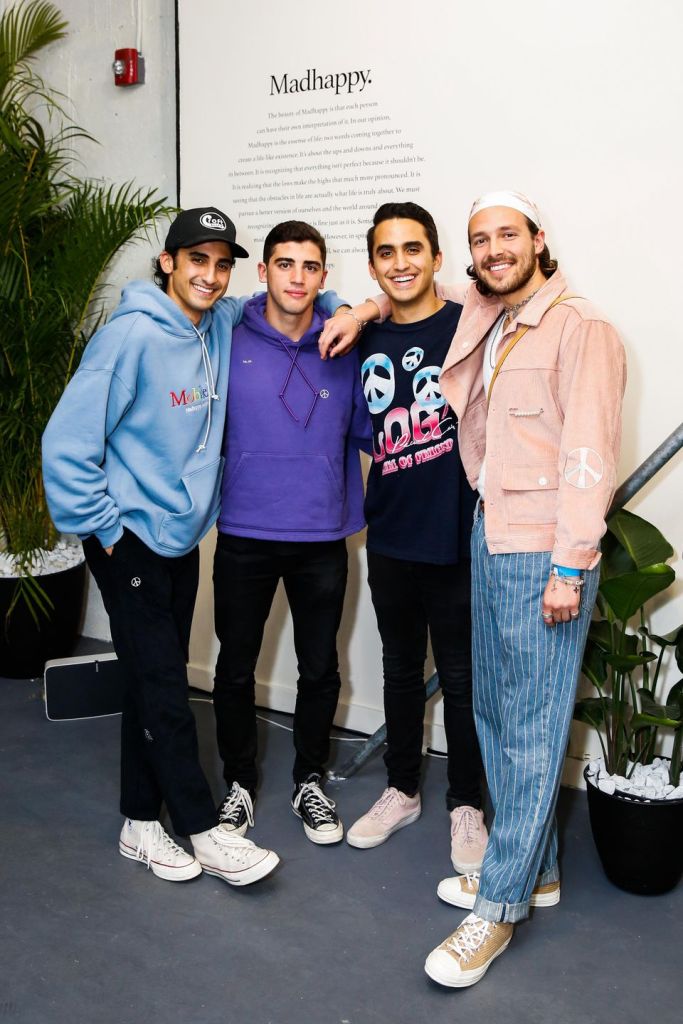
Suddenly the Instagram feeds of millennials and Gen-Z’s were crowded with ads about MadHappy: the optimistic lifestyle brand dedicated towards bringing awareness to mental health and crushing its stigma. The ads showcased an array of colorful hoodies, sweats, and tees, and each piece had a unique, stand-out stitching surrounding its hood.
What I originally thought would be another clothing brand committed to delivering that hypebeast streetstyle aesthetic every testosterone-driven LA-native was dying to achieve, actually proved itself to be much more powerful than that. The MadHappy brand surpasses the status quo of wearing clothing for the sake of style and trend adherence. According to an interview the founders had with Forbes, they view MadHappy as more of a movement than as a fashion brand, as something much bigger than the casual streetwear they sell on their website and in their pop-up shops. Each piece portrays a positive message of hope and optimism, but most importantly, a sense of community, belonging, and a reminder that “we have way more in common than we do differences.”
Rather than promoting the typical exclusive image so many labels pride themselves on (I mean, look at Hermes and the nearly impossible task of purchasing a Burkin), MadHappy considers itself to be an “inclusive community of local optimists” that host both digital and physical experiences to “give a platform to mental health.” The MadHappy brand extends its influence far beyond its product offerings. Amongst their seven immersive pop-up shops – in cities like Los Angeles, NYC, Aspen, Williamsburg, Melrose Place, Miami, and Aspen – they host “at least one panel on mental health and usually a few other wellness events (meditation, workout, yoga, etc.),” according to Peiman Raf. And for those of you who don’t have access to their pop-ups, they have an online space called the Local Optimist where stories, interviews, ways to get help or get involved, and advice (on habits, boundaries, stress, etc.) are shared by therapists, the founders, and MadHappy community members alike. But their mission to positively influence the community doesn’t stop there. The brand introduced a donation portal on its company’s website in 2019 that highlights three charities they believe make a compelling difference in our world: American Foundation for Suicide Prevention, National Alliance to End Homelessness, and Donor’s Choose, aimed at promoting the normalization of mental health, ending homelessness, and creating equal access to education. When checking out on their website, it’s the consumer’s choice to decide which of the three charities they’ll have MadHappy donate $1 to (I know this may not seem like a lot, but they had nearly a million dollars in profit by the end of 2018).
MadHappy has been paving the way for the future of fashion brands by tying it to social good. It is no longer about wearing something for the sake of affluence and opulence, but for the sake of relating to a brand’s mission and what they believe in and making it your own. According to Noah Raf, “When people get dressed in the morning, the clothes they put on represent them. How they feel and how they want to be seen by others… Wearing Madhappy really means more than just wearing clothes. You are wearing something with meaning, with a message that brings people together and reminds us that we have way more in common than we do differences.” In fact, LVMH, the esteemed French multinational luxury goods conglomerate that runs companies like Christian Dior, Fendi, Celine, and more, just put $1.8 million in funding into MadHappy last October. It seems as though the fashion industry will continue taking a step back from exclusion and wealth and maintain its transformation into something with a greater purpose and influence for social good.
 FASHION X EXPRESSION